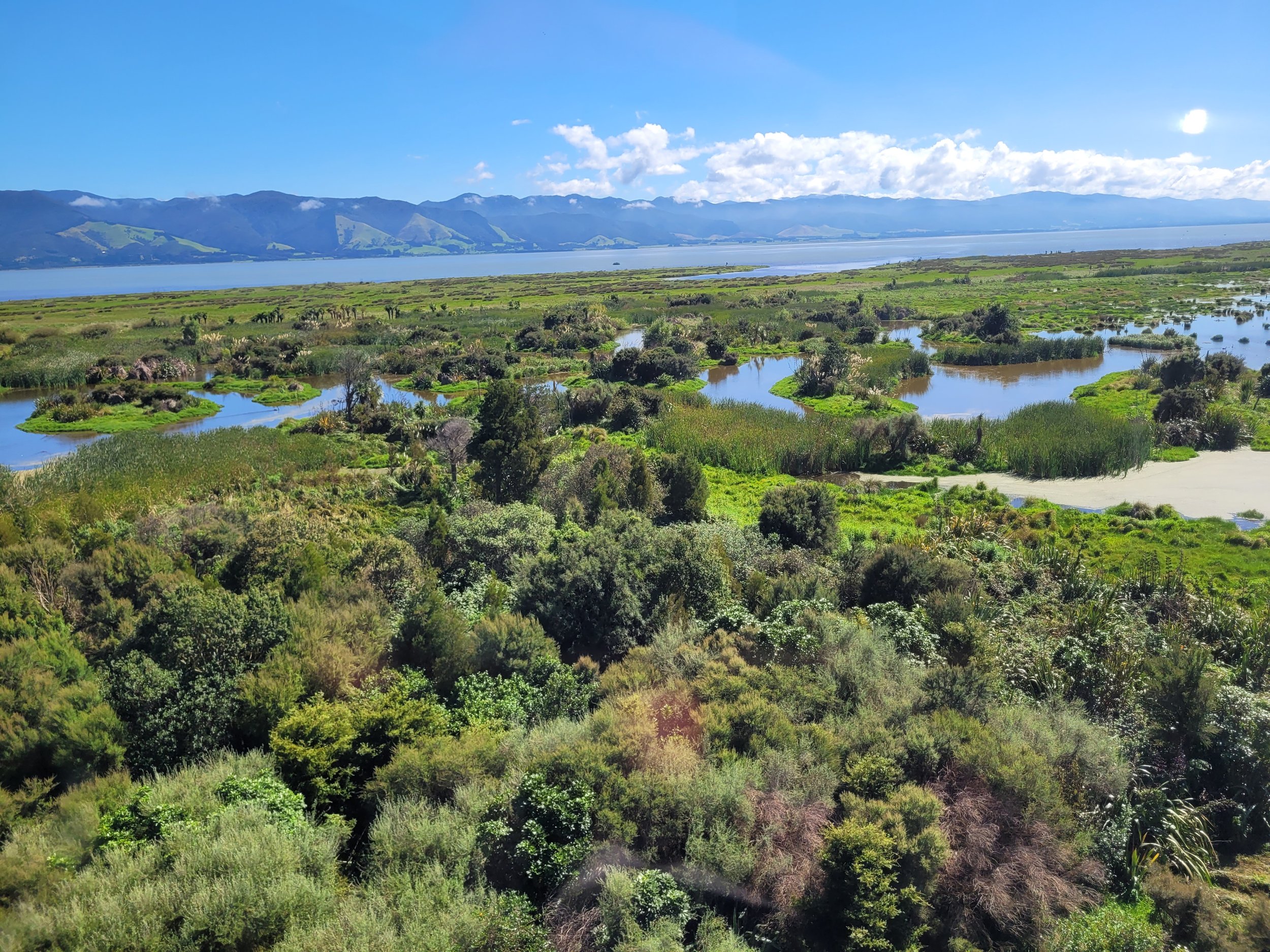
Kouraura wai, Tadpole Shrimp
The Matriarchs of the Moana
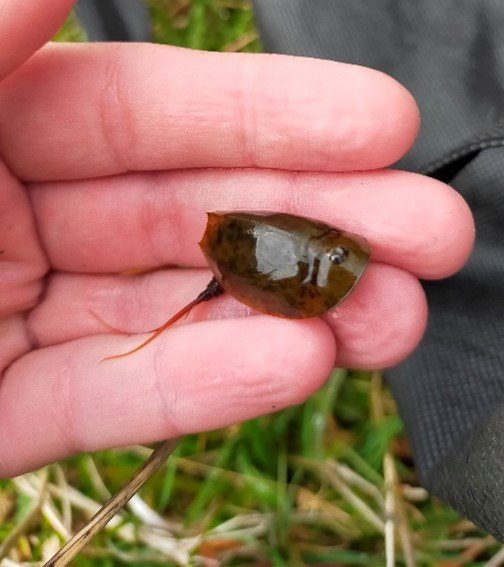
Adult Tadpole shrimp found in Wairio Wetland.
As the Brachiosaurus and Stegosaurus roamed the Earth, the teeny tiny tadpole shrimps evolved!
Swimming underfoot, in some of our most extreme habitats Tadpole shrimp are one of Aotearoa New Zealand’s more unusual wetland species.
These shield wearing crustaceans have survived, almost unchanged since the Triassic making them a living fossil. Their ancestors go back even further to the Carboniferous period (over 300 million years ago).
The Aotearoa populations stand out because they are an entirely female population, making them the ancient matriarchs of the moana.
Biological description
At just 5-6 cm long, they look a little like miniature horseshoe crabs (not related), moving through shallow water with paddle-like limbs beneath their bodies. Their ancient history and unusual appearance make them a striking example of the hidden life found in temporary (ephemeral) wetlands.
Tadpole shrimp are omnivorous feeding on both plant detritus and other small aquatic invertebrates through filtering the sediments they have stirred up while swimming.
In New Zealand, all tadpole shrimp individuals are female (hermaphroditic). With no males in sight these sisters are doing it for themselves, thriving in various environmental extremes.
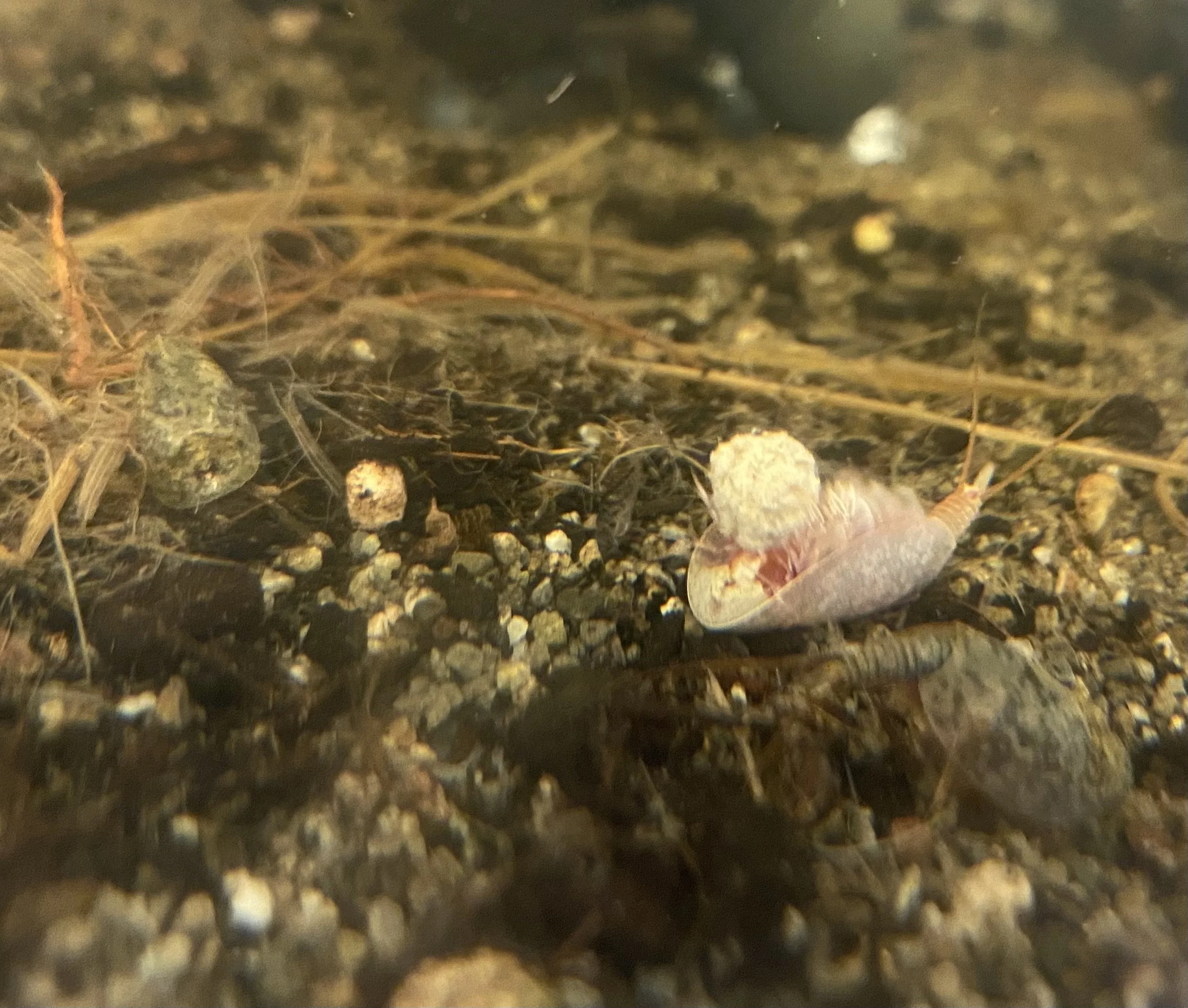
Tadpole Shrimp rolling around with their food
Habitat
Tadpole shrimp are adapted mainly to short lasting (ephemeral) wetlands where the water comes and goes as temporary ponds and tarns seasonally.
In Wairarapa Moana, they have been found on the edges of Wairio Wetland, especially around large clumps of grasses, sedges and rushes, among filamentous algae.
Not many animals can survive these ‘soggy paddocks’ at the edges of our permeant wetlands. The low oxygen, flooding, freezing and drought conditions are vital homes to other rare and hardy species like the mudfish.
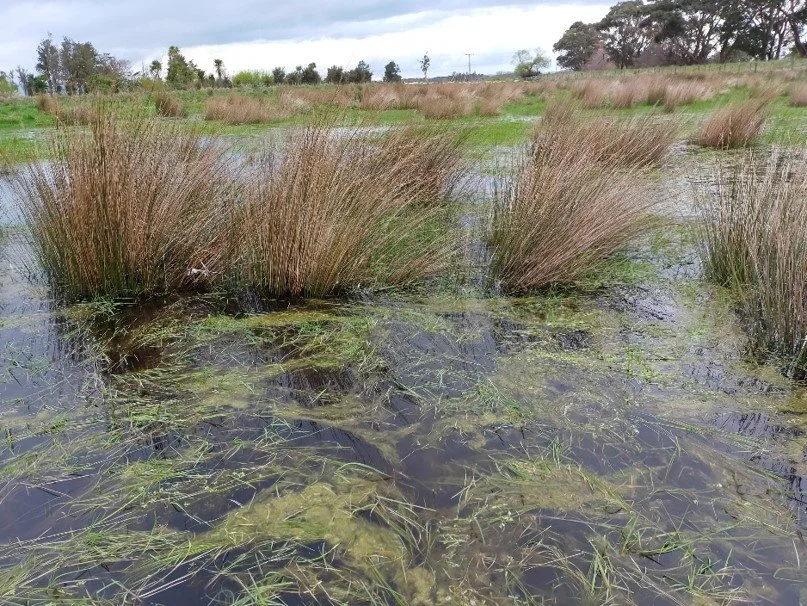
Ephemeral wetland in a grazed paddock adjacent to Wairio Wetland.
Life Cycle
Before a wetland or a water body dries out, they lay extremely tough eggs that can withstand heat, freezing and drying. The eggs can remain dormant in sediment for years; some have been recorded lying dormant for 28 years. Eggs can move between waterbodies by the wind, water and hitching rides on animals like waterfowl’s feet. When the wetland fills again after winter rainfall, usually around July or August, the eggs hatch into juvenile tadpole shrimp called metanauplii. If conditions are right, they can reach maturity in just two weeks
This matters because ephemeral wetlands can look empty or insignificant for much of the year, yet they can support rare species that have adapted to those wet-dry cycles and survived for millions of years.
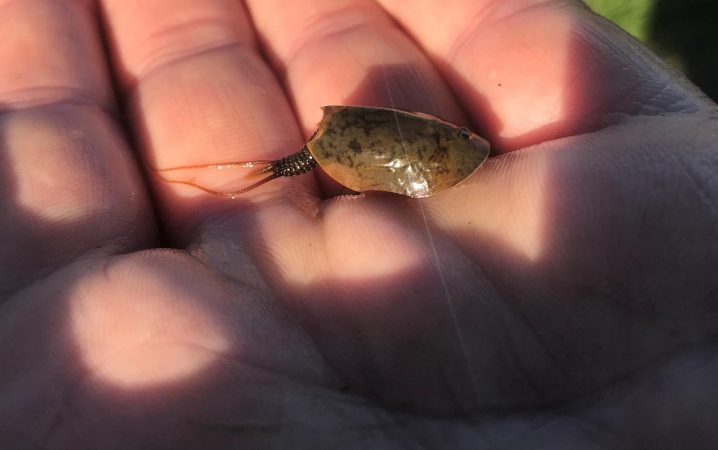
Adult Tadpole Shrimp found in Wairio Wetland
From DOC Conservation Blog (Time-travelling trilobites have baby with horseshoe crab | Conservation blog):
Tadpole Shrimp was classified as ‘Threatened – Nationally Endangered’ in the most recent conservation status assessment (in 2018), meaning it faces a high risk of extinction in the short term. Information on actual numbers of tadpole shrimp populations in New Zealand is patchy, however, as their unusual lifestyle makes them tricky to survey.
The main pressures on tadpole shrimp are linked to changes in the wetlands they depend on:
• The temporary ponds they need are often either filled in or modified as part of land use change (often associated with agriculture).
• Increased water use with activities like irrigation can change the hydrology of these habitats, making them unsuitable habitat for tadpole shrimp.
• Stock access can degrade the habitat via “pugging” – essentially, the ground gets churned up by lots of tromping hooves, compacting the soil below.
• Wetland drainage causes a loss of habitat for a huge range of species, including these guys.
• Invasive plant species (like grey willows) can lead to structural changes in the habitat, which can make it unsuitable for tadpole shrimp.
• Climate change will also impact this species and its habitat. For example, it will change the presence and cycles of water in a habitat (its hydrologic cycle) and increase the growth rates and distribution of several invasive species.
Further information: